People often mix up manufactured and modular homes, and it doesn’t help that a lot of literature groups them together, using terms like “mobile-modular.” Modular homes are about as similar to manufactured homes as a desktop computer is to a laptop. In fact, I’m pretty proud of that analogy. Both are computers. Both are technically portable. One, however, is meant to be set up in one place, have its various components connected (computer, monitor, keyboard, mouse), and stay there, while the other is intended to be carried around a bit more. Modular homes are built in pieces, transported to the home site, and assembled; most of the work is done before the final assembly, so on-site build time is very short. There are a number of different systems around for this type of home, so what I say here is going to be fairly general, and won’t cover every option out there. For these purposes, the homes I’m talking about are made primarily from wood; there are other modular systems that I’ll discuss separately.
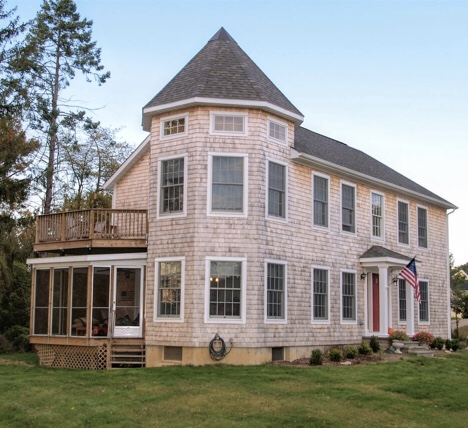
•Portability: In most cases, modular homes are only portable before they are assembled; in fact, I almost didn’t bother discussing them for that reason. Once they’re put together on-site, they’re essentially the same as site-built homes. There are, of course, exceptions, due to the many ways these homes can be designed. In most cases, the initial transport is every bit as complicated as moving a double or triple-wide manufactured home, without the option of moving the home again at a later time. Portability score: 1
•Ease of setup: This is a job for professionals, typically with a crane. You’re unlikely to do this one yourself in an afternoon, or even with a group of friends that you can pay in beer, unless you have your own crane and your friends happen to build modular homes for a living. If that’s your situation, maybe we should be friends, and I don’t even like beer, so that’s a big win for you. Setup score: 1
•Quality of materials: You can get a modular home made from very high quality materials, second to none when it comes to ‘portable’ housing, though as I stated earlier, I’m focusing here on homes made from wood. There are undoubtedly some low-cost, lower-quality options, but I’m giving the benefit of the doubt. Materials score: 4
•Use of space: The options here are virtually limitless, and even include those cathedral ceilings you can’t get in a manufactured home. Space score: 5
•Suitability to the climate: With so many different possibilities, there is certainly a modular home that’s well-suited to nearly any climate. Where modular homes beat manufactured homes is in their ability to have thicker walls with higher R-values, which means less energy used to heat or cool them. Climate score: 4
•Pest resistance: As with climate, the wide range of products means a wide range of pest resistance, but as these are wood homes, rodents and termites can be an issue. The advantage a modular home potentially has over a manufactured home is that if it sits on a slab or a concrete foundation built such that rodents can’t gain access to its underside, and a rodent-resistant siding is used, it may be possible to keep rats and mice out of the home. Pest score: 4
•Style: You can have almost any style you want. ‘nuff said. Style score: 5
•Sustainability: Again, the variety of options makes this a tough one to score, but since modular homes don’t use a lot of excess steel to make them highway-worthy and they don’t burn up cheap tires going down the road, and because of the potentially lower energy costs associated with better R-values, they get one point more than manufactured homes. Sustainability score: 4
•Price: You’re not getting one of these homes off a used home lot, and you aren’t getting one cheap. Price score: 1
Total score: 29
Biggest pro: Nearly limitless design options
Biggest con: It’s not so much portable as it’s just a quick build.
Most unique feature: You can build a four-story modular home if you want to.
 year 45