I’ve spent a lot of time in this blog discussing various portable and quick-build human habitations, but the truth is, in the scheme of things, these are the least important structures for me. I can live in nearly anything; I prefer to have a clean bed that I don’t have to share with any animals, and a TV. If there aren’t any restaurants nearby I need a place to cook, but that can be as minimal as a microwave and an outdoor grill, which is all I have currently. I haven’t had indoor plumbing in over ten years, and haven’t found it to be much of a problem; I have an outhouse with a flush toilet (flushing done with a bucket of water), which is something I can build in a day. I also know how to make a very nice composting toilet for about $30, in considerably less time. I’m not saying I don’t want more, but I am saying I consider anything more than what I have today to be a luxury — one I’d be grateful for, certainly, but not anything that I require.
What I do need, more than indoor plumbing or a living room, are outbuildings, for working, storage, and animal housing. To review my plan, briefly, I intend to set up a ranch, with animals, in one place, and relocate it to another place and develop it into an agroforestry operation that’s subsidized by tourism. A normal reaction to this idea is to ask why I wouldn’t just move to my ultimate location in the tropics and then go about procuring livestock, and that’s a question I’ve answered elsewhere, but to reiterate: I’ve already put a considerable amount of work into my poultry breeding, all of which would be thrown away if I started over; and there is a significant limit to what animals are available outside the US, Canada, and Europe. If you haven’t read about my trip to Panama, the entry contains a brief, sort of case study in the lack of livestock variety in small, tropical countries.
So while my move to Texas, assuming that’s where I end up, will involve relocating about 150 birds, several dogs, and a pig, the next move will likely include more, larger animals. Even after the move, I’ll continue to use the Texas ranch to prepare additional animals for export. And that means outbuildings, in both places, which is what I was getting at … so …
Quonset huts are some of the most stable, economical structures around, and they’re used for all kinds of different things. There are two, main types: steel and canvas. If you’ve ever left the city or suburbs, you’ve probably seen both types, or at least the steel ones. Steel Quonset huts are made from interlocking ribs that bolt together, forming a corrugated arch. The ‘skin’ of the structure and the frame are one and the same. (There are some that use siding over a frame, but those are dumb.) The length of these structures is limited only by geography. End enclosures, if used, can be made from the same material as the rest of the structure, or from any other material the builder desires. Steel Quonset huts are typically bolted to a concrete foundation or slab, though there are other options available.
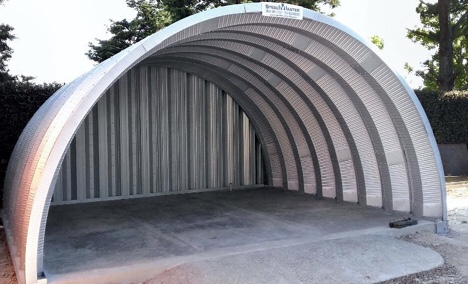
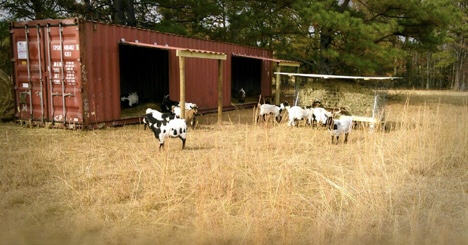
A canvas Quonset hut utilizes a steel frame with a canvas cover; the service life of the cover is shorter than the life of an all-steel model, but it does last about twenty years, and can be recycled and replaced when its time is up. The canvas being non-conductive, and usually white, means these structures tend to stay cooler on hot days, and depending on the specific model, sides can also be rolled up for ventilation. There are numerous foundation or anchoring options, including concrete foundations and slabs, wood posts, and helical anchor systems, but the system I find the most exciting, and yeah, I just said exciting, is the shipping container option, wherein the canvas structure forms a roof between two (or four, six, etc.) shipping containers. This setup allows for the containers to be used for clean, rodent-proof storage, offices, work areas, etc., while the canvas-covered area can be used to shelter animals, dry lumber, protect vehicles and equipment, and so on.

Shipping containers are useful independent of any other structure as well, and not only for storage. I will need a climate-controlled incubator room, and preferably someplace to house birds that need to be in isolation. A container or two with solar panels mounted to its roof can provide ample power to the entire project, or a genset can be containerized.
I’ve seen barns constructed from multiple containers, with the biggest challenge in a hot climate being keeping the structure cool and well-ventilated. One option that has intrigued me for some time is the incorporation of a live floor into a poultry barn. For those who don’t know, a live floor, also called a Walking FloorTM, uses a system of slats to move material. I won’t explain exactly how it works, but it’s pretty simple, so watch some YouTube videos if you’re curious. The effect of having a live floor in a barn would be that it makes it essentially self-cleaning. If you believe in deep-cleaning your barn from time to time, you’d still have to do that, but I don’t agree with the practice, as whenever I’ve done it I’ve ended up with an explosion in the fly population. Turns out there are parasites and predators that live in barn bedding and keep the flies under control, as long as you leave a little of the old poop behind when you clean. With chickens, turkeys, and guinea fowl, which continually dig through bedding, I prefer a dirt floor and a thick layer of bedding that just gets topped off from time to time, but for ducks and geese, which quickly create a ‘skin’ of manure over their bedding, a self-cleaning barn is a good idea, unless you plan to house them with chickens. (I also like to flood my barn floor a few times a year; this brings lots of tiny bugs to the surface, which the birds love, and it sort of charges up the composting process, allowing me to go even longer without removing any old bedding, just adding more clean stuff on top. I would not do this with a live floor system.)
Another option for housing chickens is a portable structure like the ones made by PrairieSchooner, which is similar to a canvas Quonset hut, but has features specific to chickens and is intended to be dragged behind a tractor or truck to relocate it when the manure builds up. The area left behind becomes more fertile than it was before the henhouse was there, so the design is good for soil building and forage production. There are other portable poultry houses on the market as well, or one can be built fairly quickly. Drawbacks of this design are that it is fairly easy for predators to get in, it doesn’t work on uneven ground, and in the case of the PrairieSchooner, you have to find your own tarp for a cover. I also don’t love the way the interiors of these units tend to be laid out in terms of human access — I try to eliminate bending, stooping, and stepping over things when I design my structures.

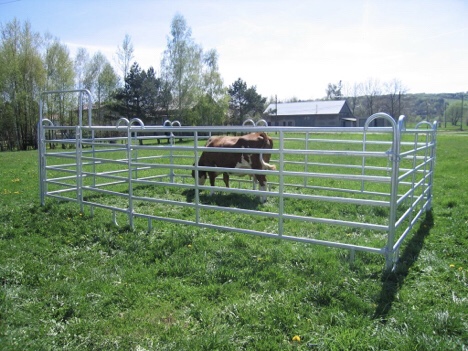
For larger animals, livestock panels (frequently available at auction) are already very commonplace on farms, and with the right equipment other types of fencing can go up fairly quickly. My favorite fencing brand by far is Stay-Tuff, out of Texas. It’s a high tensile mesh that comes in a lot of different heights and wire spacing schemes; I’ve had some up for about 13 years in a very wet environment and it’s showing no signs of age whatsoever.

In addition to the shelters discussed previously, larger animals can be given run-in sheds, which are three-sided structures that allow them to get out of the rain; the open side faces away from the prevailing wind, but the structure could also be flipped around if the wind direction changes seasonally. These structures can be purchased fairly cheaply, or made from wood, with the expectation that animals will chew a wood structure.

My pig currently has a three-by-five-foot house with a heat mat installed in it; the house is designed to be moved with a forklift, and can be enclosed quickly to be used for transport. I will probably take his house wherever I take the pig; it now sits on a concrete slab, but can be anchored to something more substantial in a high wind area. (Although, to be honest, the thing is really damn heavy and it would probably take a tornado to move it.) In a warmer area I would remove the heat mat, or just switch her to a larger, lean-to type structure; the downside to the house she has now is that she can’t have any nesting material on the heat mat, for safety reasons, and she really does like to build nests.
My dogs currently kennel indoors, due to our wet weather. I have LGDs (google it if you need to) that stay with my birds, but I have other dogs that will gladly kill birds, or whatever else they can, so they have to be contained. I would like to fence off an acre for them, divided into quarter-acre yards, with a central, partitioned structure to house them. I have a design for a concrete structure I’d like to use, but prior to that I might go with some wood houses like my pig has, or some larger lean-tos. The big concern here, as with all these structures, is wind. Areas affected by hurricanes require more substantial structures than elsewhere, and that’s one of the big appeals of Panama for me — no hurricanes. Assuming wind is an issue, however, a particularly strong, heavy, and wind-resistant doghouse can be made from a length of concrete culvert stood on end and capped with a slab. Obviously these are heavy items to transport, so they’re better purchased locally, or poured in place; if you’re really good you can pour it all at once. Another, similar option is to build something like a large, wood-fire pizza oven. And of course you can just use cheap shelters and plan to put the dogs someplace more secure if a big storm is coming. For indoor kennels, the company I used to buy them from is out of business, but I’ve found a similar product made from better materials. Look up TK Products LLC — if I decide to use this type of kennel again, these are what I’ll buy.

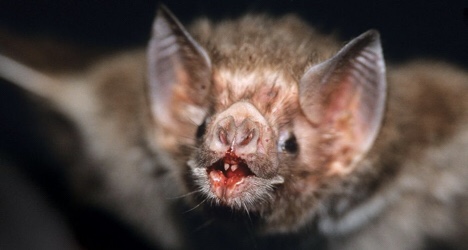
One issue in the New World tropics that has to be addressed is vampire bats. Sorry if that was a little jarring; I don’t have a good vampire bat segue. In talking to livestock owners in Central America, I’ve confirmed that the bats are, indeed, a problem, not merely for their role in spreading rabies, but for the infections they cause. I am told, however, that light repels the bats, so confining animals at night in a lit environment might be all that’s needed to keep them safe, but this will require more research. Two of the three vampire bat species feed on birds, so they’re a greater threat to my poultry than to any larger animals I might have (smaller animals, less blood to spare). I prefer to try to keep my birds in a fully secure barn or pen at night, but I get that this is tricky with temporary structures. How to deal with vampire bats is an interesting topic and I’ll probably write more about it another time.
For quicker reference I’m going to sum up this entry in something more closely resembling list form:
Workshop, tool and equipment storage: Clearspan Canvas building with shipping container base
Power station: shipping containers with solar array and backup generator
Incubator room and other bird care facilities: shipping container
Pigeon coop: shipping container or run-in shed with bird netting or modular panels for flight cage
Poultry coop(s): Option 1) PrairieSchooner or similar, with small mesh to keep bats out; Option 2) shipping containers with ventilation added, possibly with live floor; Option 3) Clearspan Canvas with mesh or modular wire panels inside to keep bats, other animals out at night
Dogs: Option 1) Stay-Tuff fences yards with concrete or wood houses built on-site; Option 2) TK kennels inside another structure
Pigs and larger livestock: Stay-Tuff fencing or livestock panels with run-in sheds for shelter; research using lights to repel vampire bats and if not effective, keep animals in more secure structures at night
 year 45