Bitter (about the) Cold

Yeah… we’re not loving it.

It’s actually going to be colder in central and southern Texas in the next few days than it has been here in years. I’m not saying I don’t still want to move there, but if I could skip it and go straight to the tropics I think I would.

Being homesick for a place where you’ve never lived is weird, but it’s the best way I can describe how I feel, especially when the winter weather starts wearing me down. It’s more psychological than physical. I can handle the cold, and I’ve been through way colder winters than this. I still go out barefoot in this stuff. The cold doesn’t hurt me, it offends me. And apparently my cockerels feel the same way.

On the plus side, I don’t have to round up the waterfowl at night, because they’re already inside when I get there, including the geese, who normally stay out. And my RV is warmer under a blanket of snow than it is on a cold, windy night.

Could be worse. Sometimes I’m tempted by the low price of farms in northern Michigan and Wisconsin, but then I look at the weather report.

Hard pass. I’ve had my share of frostbite over the years, and I think I’m willing to put those days behind me for good.

An Open Letter to Verizon Wireless

A few years ago a Verizon employee was passing through my town, and he told us he was upgrading the local cell towers for 5G. Back then I always had four bars of 4G and I usually got over 20 Mbps, even out here in the sticks. When Verizon started offering unlimited data again, I dumped my crappy DSL service, which never got more than 6 Mbps and cost over $100 a month. I bought a Jetpack for my home internet, and quickly learned that my unlimited data wasn’t actually unlimited; Verizon throttled back by speed each month when I exceeded my 15Gb limit. I did that pretty quickly, because I stream video while I’m doing other things, and sometimes the videos autoplay for awhile after I fall asleep at night. There’s nothing better than using up all your good internet for the month on the first night while you’re sleeping. Continue reading

Portable Housing: Outbuildings

I’ve spent a lot of time in this blog discussing various portable and quick-build human habitations, but the truth is, in the scheme of things, these are the least important structures for me. I can live in nearly anything; I prefer to have a clean bed that I don’t have to share with any animals, and a TV. If there aren’t any restaurants nearby I need a place to cook, but that can be as minimal as a microwave and an outdoor grill, which is all I have currently. I haven’t had indoor plumbing in over ten years, and haven’t found it to be much of a problem; I have an outhouse with a flush toilet (flushing done with a bucket of water), which is something I can build in a day. I also know how to make a very nice composting toilet for about $30, in considerably less time. I’m not saying I don’t want more, but I am saying I consider anything more than what I have today to be a luxury — one I’d be grateful for, certainly, but not anything that I require.

What I do need, more than indoor plumbing or a living room, are outbuildings, for working, storage, and animal housing. To review my plan, briefly, I intend to set up a ranch, with animals, in one place, and relocate it to another place and develop it into an agroforestry operation that’s subsidized by tourism. A normal reaction to this idea is to ask why I wouldn’t just move to my ultimate location in the tropics and then go about procuring livestock, and that’s a question I’ve answered elsewhere, but to reiterate: I’ve already put a considerable amount of work into my poultry breeding, all of which would be thrown away if I started over; and there is a significant limit to what animals are available outside the US, Canada, and Europe. If you haven’t read about my trip to Panama, the entry contains a brief, sort of case study in the lack of livestock variety in small, tropical countries.

So while my move to Texas, assuming that’s where I end up, will involve relocating about 150 birds, several dogs, and a pig, the next move will likely include more, larger animals. Even after the move, I’ll continue to use the Texas ranch to prepare additional animals for export. And that means outbuildings, in both places, which is what I was getting at … so …

Continue reading

Portable Housing: the Verdict

So what’s the best portable housing option for my project? When we’re still in the totally theoretical stage, it’s hard to say. What I’d really like to do is get a big team together and try all of them — rent a bunch of RVs to start, and as each home is set up, take the RVs back and have the team members move into the new structures. I bet I could do it for a couple million bucks. But while you’re making that happen for me…

I keep changing my mind, and it really does depend on the circumstances.

The perfect property and a big budget: If I was to find myself in this unlikely scenario, I can’t think of a cooler and more exciting way to do the move than building a barge house and taking it through the Panama Canal. It’s a pipe dream but it’s fun to think about. Continue reading

Portable Housing: Everything Else

There are various homes designed for something very near what I’m trying to do, that don’t fit well into any of the categories I’ve already written about, or they fit into more than one category, so I’m cramming them all in here. I’m not going to score these but I’ll do the pros and cons thing at the end of each one.

Boxabl: These are pretty cool. Boxabl is a 375 square foot, fully equipped home that folds up for transport. It’s also modular — you can join separate units side by side or you can stack them. There’s nothing to install once the home is opened up and snapped together, which takes about an hour. You build the foundation and hook up the utilities. The collapsed unit at time of shipping is about 8’x20’x10’ and is light enough to tow behind a pickup. Setup requires a small crane or a telehandler. Boxabl currently has only one size and floor plan, but the company says more are on the way, ranging up to 1,200 square feet. The current model costs $49,500 and the company offers third party financing; they are not available for purchase at the time of this writing, but you can reserve one, and I’m seriously considering it. The unit is made of concrete, steel, and EPS foam, so a lot of the problems you get from more ‘traditional’ building materials like mold and insects are eliminated. Boxabl even claims that because of the materials they use, the home can be flooded and suffer no damage.


Continue reading

Portable Housing: Boats!

I’ve spent a fair amount of time on boats in my life, but I’m not a boater, per se. I’ve always liked boats, but my friends with more experience have told me that a boat is a hole in the water where you throw money. None of my experienced boater friends own boats. That’s probably something to take to heart. Still, the appeal of living on a boat is hard to shake, and it’s also the last of the sort of atypical housing types that I haven’t tried yet. Continue reading

Portable Housing: Kit Homes

There are, on the market, all manner of kit homes that can be ordered and delivered, ready for assembly. They range from little more than a shed with a window to sprawling mansions. There are log home kits, timber frame kits, steel building kits, and the list goes on. I’m not going to get into all the options here, because the general idea is the same for all of them: everything you need to build your house, and presumably some kind of instructions, to get a home built quickly. These homes are not portable once they’ve been built, unless they are very small and on skids.

As a builder, I believe that in some cases I could save money by assembling my own kit, and doing as much prep work as possible before the materials arrive on the build site. In other cases I’d simply never be able to get my costs as low as what the factories offer. That’s not necessarily a good sign — it can simply mean the factory has access to cheaper, lower quality materials than I can buy. Continue reading

Portable Housing: Tent Homes

I’m using some photos in this entry that belong to manufacturers of the products I’m discussing, but since I’m promoting their companies I figure they won’t mind. If they do, I’ll take them down.

This is an entry I’m glad I didn’t publish right away, because in the words of Jeffrey Lebowski, “new shit has come to light.” I’ve attempted tent living a few times, with mixed results, and what I’ve learned is that if you’re going to do it, you need to make sure you have a tent that was made for long-term use. Of course you can live indefinitely in a small, camping tent, but your friends and family won’t want to come visit and despite your protestations everyone will describe you as homeless. That raises some interesting questions with regard to homelessness; when I lived in a car I was homeless, but if I parked the car on property that I owned, was I still homeless, or did I live in alternative housing? Was I homeless when I slept on my friend’s couch and helped with some of the bills? What about the other time I did that and didn’t help with the bills? And what about now, living in an RV that’s falling apart, on my own land? The world may never know the answers to these very important questions.

Getting back to tents, there are a lot of fabric structures you can make a home in. A week ago I’d have said that the two best options were military surplus tens and yurts, but as I said above, “new shit…” which I’ll get to momentarily. Regardless of what configuration you choose, you can have a lot of room inside a tent, and if you prefer to live outside, and maybe let nature live inside, too, this might be perfect for you. I recommend that you erect the tent structure on a concrete slab, pavers, or a wood deck, and run all your wiring and plumbing under that if you can. Mount your breaker box on a post outside. To create separate rooms, you have all kinds of options, from portable screens to permanent walls, bolted to the floor or attached to the tent frame itself.

Now for the top four tent options, in no particular order, and I’m going to plug some brands here. I will probably come across other brands and styles as I continue to research, but for the moment, these are my picks: Continue reading

Portable Housing: Park Model Homes

A park model is an RV crossed with a manufactured home, or to put it another way, it’s a small, manufactured home that’s licensed as an RV and can be towed with a pickup. It’s a lot like a tiny house on wheels, except it’s a bit bigger than tiny, and you don’t have to climb into a loft to sleep at night. Park models come in a lot of different styles, from rustic-looking cabins to something more like an RV or a vintage mobile home. They’re very popular, and there was a time when they were difficult to find for sale, due to high demand, but that time seems to have passed. An RV dealership in my county now has a second lot devoted entirely to park models, some of which look more like houses or cabins, and others of which look more like RVs, with metal siding and slide-outs.

Continue reading

Portable Housing: Tiny Homes

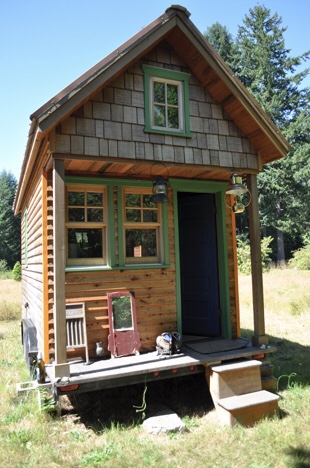
Of course I have to talk tiny houses. For a lot of people, they’re the ultimate in portable homes. There’s something romantic about them: their elegant styling, their efficient use of space, their homey feel. For these purposes, when I say tiny house, I’m talking about something with under 250 square feet of living space, that’s intended to be portable, which is achieved either by building it on wheels or on skids so that it can be lifted or winched into a trailer. I recognize that this is not the ‘official’ definition and that some people consider a 400-square foot site-built home to be tiny, but I don’t; I consider it small. As much as people love tiny houses, and despite the fact that I toyed with the idea of building and selling them for a living, I confess that I’m not a fan. I see tiny homes the same way I see the Chevy Avalanche. The Avalanche is meant to be part truck and part SUV; it has a short truck bed or sorts where an SUV would normally have a third row of seating or an interior cargo area. As such, it’s not a very good SUV because it won’t keep your stuff dry, and it’s a terrible pickup truck because the bed isn’t big enough to carry anything you would put in the back of a truck. You can’t tow much of anything with it, and it’s ugly as hell. Likewise, a tiny house occupies the middle ground between a small, site-built home and an RV. Where it tries to resolve the shortcomings of each, it creates its own set of limitations.

Continue reading

Portable Housing: Recreational Vehicles

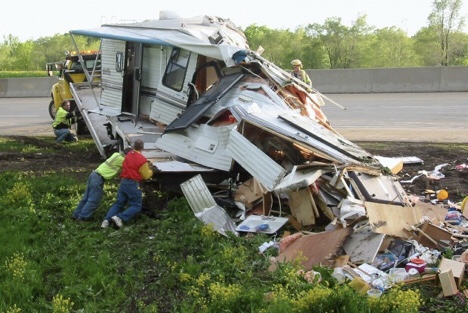
I live in a travel trailer. I hate it. RVs are terrible. If you’re traveling full-time, but you don’t want to go farther south than Mexico, an RV might be an OK choice for you, but in general, they’re garbage, and a lousy option for long-term housing. They’re poorly built — even the expensive ones. One minor bump and your roof leaks forever. Even with slide-outs, your floor plan options are extremely limited. The kitchens and bathrooms are horrible — I don’t even use mine. And you’re hauling around a tank full of your own shit, and maybe other people’s shit, and that’s disgusting. Try taking a long, hot shower in an RV, I dare you. Try having some friends over. It’s just not a functional home.

Continue reading

Portable Housing: Container Homes

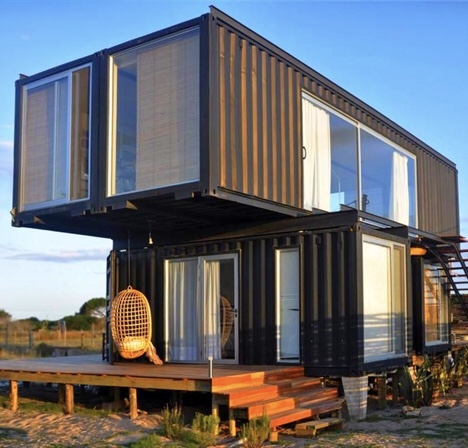
There was a time, not too long ago, when used shipping containers, known to some as intermodal containers, ISO containers, or Sea-Tainers, were free. Those days are gone, and now you can expect to spend at least $2,000 on a used container, and closer to $4,000 for a 40-footer. If you’re in the container business there are better deals to be had, and that’s something I’m working on, because aside from housing, I have a lot of uses for these things. I currently own only one, a 20-footer I took in trade for some home remodeling. I could probably make good use of at least fifty more of them. That’s really not an exaggeration.

Container houses are trendy. Continue reading